The Profit You Don’t See Leaving
Ask most property owners what keeps them up at night, and they’ll talk about finding tenants. Filling vacancies. Marketing units. But the most expensive line item on a rental property’s profit-and-loss statement is often the one nobody tracks: turnover.
Turnover doesn’t show up as a single charge. It doesn’t arrive as an invoice. Instead, it accumulates quietly — a month of lost rent here, a paint job there, a few weekends of showings, a rushed lease with the wrong tenant — until you realize the property that was supposed to generate steady cash flow has been bleeding margin all along.
After more than three decades of owning and managing both residential and commercial properties across New England and Texas, we’ve seen firsthand that the owners who succeed long-term aren’t necessarily the ones who are best at filling units. They’re the ones who are best at keeping them filled.
What Turnover Actually Costs
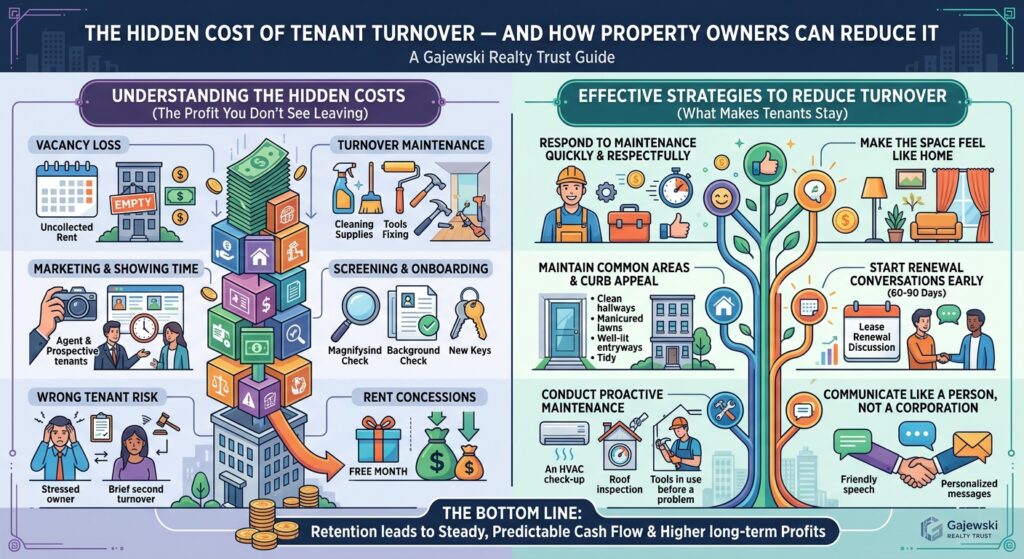
When a tenant leaves, the costs stack up in ways that are easy to underestimate individually and devastating in aggregate:
- Lost rent during vacancy — Every week a unit sits empty is revenue you never recover.
- Turnover maintenance — Cleaning, painting, carpet replacement, appliance repairs, and the dozen small fixes that only surface between tenants.
- Marketing and showing time — Listings, photos, walkthroughs, phone calls, and the hours spent coordinating access.
- Screening and onboarding — Background checks, lease drafting, move-in documentation, and administrative setup.
- The wrong-tenant risk — Pressure to fill the unit quickly often leads to compromises on screening standards, which can result in a short, problematic tenancy — and another turnover six months later.
- Rent concessions — Offering a free month or reduced rate just to get someone in the door eats directly into returns.
Add it all together, and a single unnecessary turnover can wipe out months of positive cash flow. Multiply that across a portfolio, and the impact compounds.
Why Tenants Leave
Most tenants don’t leave because of rent. They leave because of how they were treated.
The most common reasons tenants cite for not renewing aren’t about price — they’re about experience:
- Slow or dismissive maintenance response. When a tenant reports a problem and it takes weeks to resolve — or worse, gets ignored — the trust is broken. This is the single biggest driver of non-renewal in residential properties.
- Feeling like a transaction. Tenants who feel the owner only cares about the rent check, and not about the person living in or operating out of the space, start looking for somewhere they’ll be valued.
- Neglected common areas. A dirty hallway, a broken lobby light, or an overgrown lawn signals that nobody is paying attention. If the owner doesn’t care about the building, why should the tenant?
- No proactive renewal conversation. When the first mention of renewal comes in the form of a 30-day notice or a rent increase letter, the tenant has already mentally moved on.
- Surprise costs and unclear expectations. Leases that are ambiguous about responsibilities, or unexpected charges that appear mid-tenancy, erode goodwill fast.
What Makes Tenants Stay: The Residential Playbook
Keeping good tenants is not about underpricing rent or offering constant concessions. It’s about creating an environment where people want to live — and where the cost and disruption of moving always feels greater than the value of staying.
Here’s what works:
Respond to maintenance like it matters. Because it does. A tenant who reports a leaky faucet on Monday and sees it fixed by Wednesday remembers that. A tenant who reports the same leak and waits three weeks also remembers — and starts browsing listings. Speed and respect in maintenance response is the highest-impact, lowest-cost retention lever available to any property owner.
Make the space feel like home. Small, affordable upgrades have outsized impact on how a tenant feels about a property. Fresh paint between tenancies. Adequate lighting. Clean, functioning appliances. Tidy landscaping. A secure, well-lit parking area. Access to laundry and storage. These aren’t luxuries — they’re the difference between a rental unit and a place someone calls home.
Take care of common areas. The shared spaces in a multi-unit property set the tone. If the entryway is clean, the hallways are well-lit, and the grounds are maintained, tenants feel proud of where they live. Pride of place is a retention strategy.
Start the renewal conversation early. Don’t wait until the lease is about to expire. Reach out 60–90 days before renewal. Ask how things are going. Address any concerns. Make the renewal feel like a continuation of a good relationship, not a last-minute transaction.
Be proactive, not reactive. The best owners fix the roof before it leaks and service the HVAC before it fails in July. Proactive maintenance prevents the emergencies that frustrate tenants and cost more in the long run.
Communicate like a person, not a corporation. Professionalism doesn’t mean being cold. Clear, respectful, human communication builds the kind of trust that keeps tenants renewing year after year — and recommending your property to friends and family.
The Commercial Parallel
The same retention logic applies to commercial tenants, though the levers look different. A commercial tenant renews because the space supports their business — not just physically, but operationally and financially.
Commercial tenants stay when:
- The space is reliable — functioning systems, consistent climate control, dependable access.
- Costs are predictable — transparent common area maintenance charges, no surprise assessments, clear lease terms.
- The building supports their visibility and customer access — parking, signage, location, and curb appeal.
- Communication is clear and timely — advance notice of building work, responsive property management, and a landlord who treats the tenant’s business success as a shared interest.
- Lease terms grow with the tenant — flexibility for expansion, renewal options, and terms that reflect a long-term partnership rather than a short-term deal.
A commercial tenant who feels that their landlord is invested in their business staying put is a commercial tenant who renews.
The Owner’s Retention Checklist
Whether residential or commercial, the fundamentals are the same:
- Respond to maintenance requests quickly and respectfully
- Maintain common areas and curb appeal year-round
- Conduct proactive inspections and preventative maintenance
- Start renewal conversations 60–90 days before lease expiration
- Be transparent about costs, charges, and expectations
- Make small comfort upgrades between tenancies, not just major renovations
- Communicate consistently and treat tenants as partners, not transactions
- Screen carefully — the right tenant from the start is the cheapest retention strategy there is
The Bottom Line
Reducing turnover isn’t a single action. It’s a philosophy of ownership — the recognition that a property’s long-term performance depends less on who you find and more on who you keep.
A well-run property doesn’t just attract tenants. It gives good tenants reasons to stay. And every year a tenant renews is a year without vacancy costs, without turnover maintenance, without the risk of the wrong replacement — and a year of steady, predictable cash flow that compounds quietly in the owner’s favor.
That’s not just good property management. That’s good business.
Gajewski Realty Trust is a family-owned commercial and residential real estate brand with over 30 years of experience across New England and Texas. This blog reflects lessons learned from decades of hands-on ownership, management, and tenant relationships.